
Ever felt like you have a legitimate legal complaint, but the amount of money involved isn’t big enough to get a lawyer’s attention? You’re not alone. It’s a frustrating reality for millions of Americans who are shut out of the legal system simply because their case isn’t a multi-million dollar blockbuster.
A San Francisco-based startup is aiming to change that, and they now have $3.2 million in fresh funding to accelerate their mission.
AlphaLit, an AI company automating legal intake, has officially closed its seed round. The round saw participation from leading firms like Lux Capital, Slow Ventures, and Bright Ventures. They’re joined by an incredible group of angel investors, including Ken Cornick (Co-founder of CLEAR) and Jason Boehmig (Co-founder of Ironclad), building on initial backing from Sequoia Scout Fund, Base Ventures, and Jake Heller (Co-founder of Casetext).
The legal system has a massive blind spot: small cases. For traditional law firms, the time and cost required to investigate a smaller claim often outweigh the potential financial return.
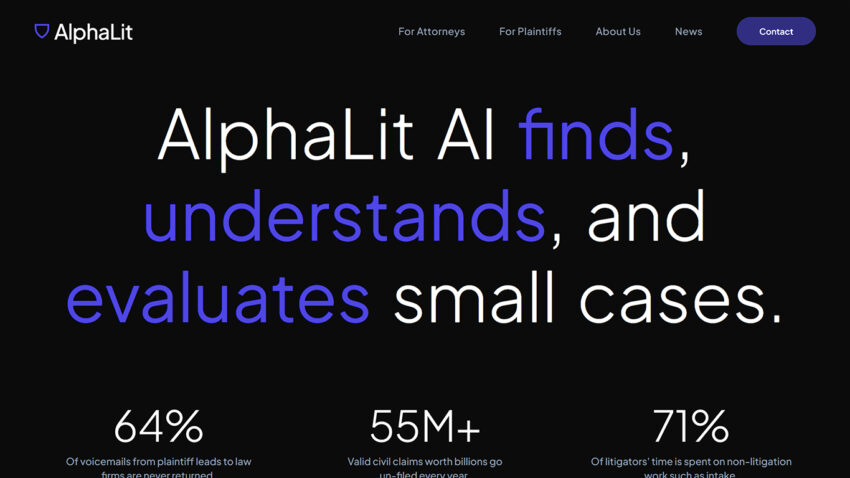
The numbers are staggering. Over 64% of calls from prospective plaintiffs to attorneys are simply ignored. This results in an estimated 55 million meritorious civil claims going unfiled every single year. These aren’t frivolous issues; they are legitimate grievances, particularly within working-class communities, that leave billions of dollars in deserved compensation on the table.
“Unless your case is worth millions or you are well-connected, it’s almost impossible to get a lawyer on the phone,” said Anand Upadhye, Founder and CEO of AlphaLit, a legal technology veteran and former litigator himself. “By using AI to handle the heavy lifting of intake and fact-gathering, we are lowering the cost of pre-litigation and opening legal access for millions of Americans.”
Here’s why this launch is so significant:
This funding and AlphaLit’s mission are significant because they represent a fundamental shift in who gets access to justice. For decades, the ability to pursue a valid legal claim has been directly tied to the potential size of the payout, creating a two-tiered system where only the largest cases get a voice. AlphaLit is leveraging technology to dismantle this economic barrier.
This is a prime example of San Francisco’s innovative spirit being applied not just to create convenience, but to solve a deep-seated societal problem and democratize access to a fundamental right.